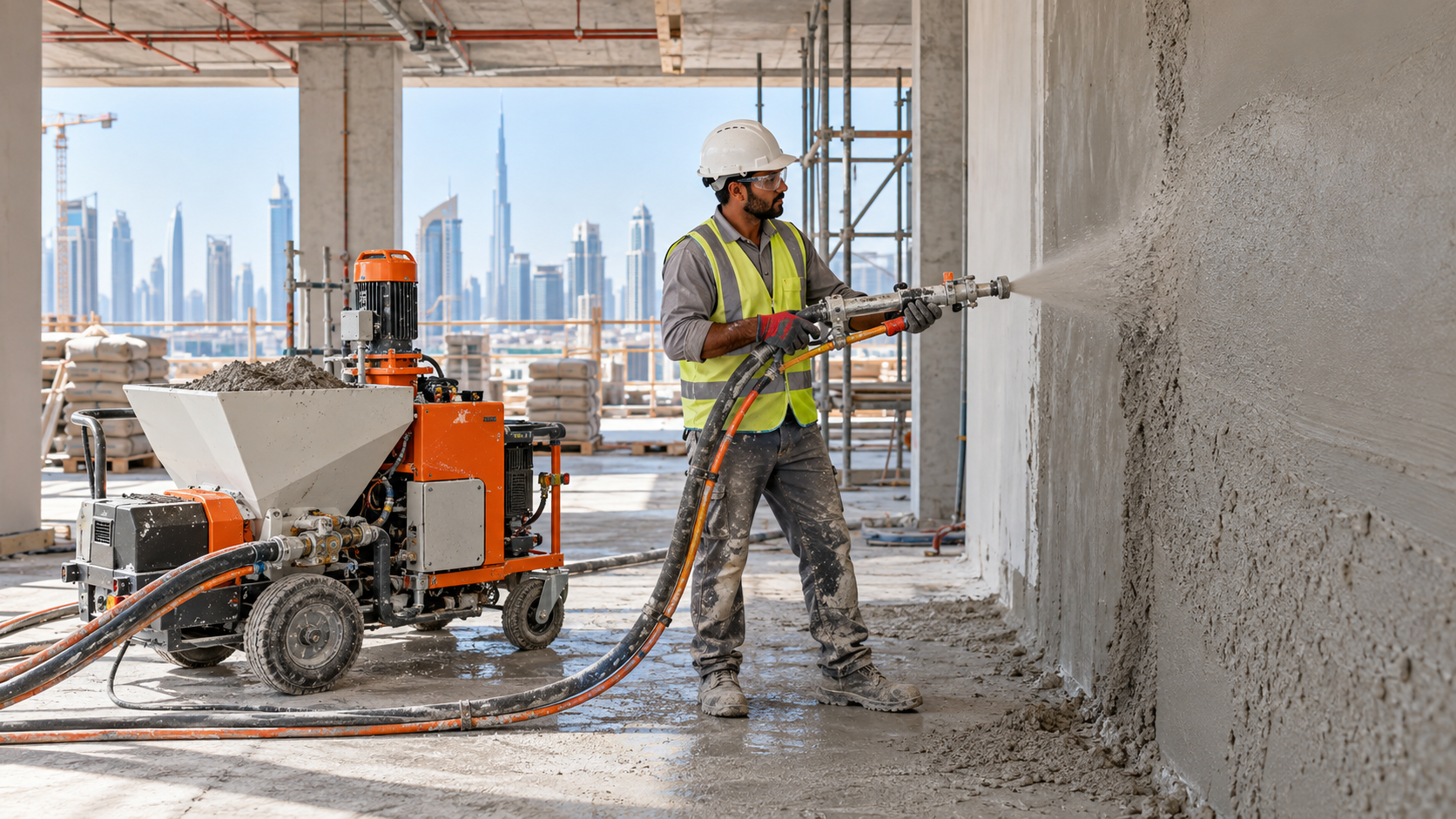
How to Choose a Plaster Spray Machine for Construction Projects
A plaster spray machine can significantly improve productivity, consistency and material handling on construction projects. However, selecting the wrong machine may cause interruptions, excessive maintenance, unsuitable material flow or lower finish quality.
The correct choice depends on the plaster material, required output, mixing method, pumping distance, available power supply and the size of the project. This guide explains the main factors contractors in the UAE should consider before selecting a plaster spraying machine.
What Is a Plaster Spray Machine?
A plaster spray machine is designed to mix, pump or spray plaster, mortar, texture coatings and other suitable construction materials onto walls and ceilings. Depending on the model, the machine may include an integrated mixer or may receive material that has already been mixed separately.
These machines are commonly used for residential buildings, villas, commercial projects, warehouses, façades and large wall-finishing applications.
Start with the Material You Need to Spray
The most important step is identifying the material that will pass through the machine. Not every plaster machine is suitable for every product, and material compatibility should always be confirmed before operation.
Common applications may include:
- Ready-mix dry plaster
- Cement and gypsum-based plaster
- Mortar suitable for machine application
- Wall texture materials
- Skim coats and finishing compounds
- Sprayable fillers and compatible rendering materials
Consider the material’s grain size, density, setting time and required water ratio. Heavy materials or mixes containing larger particles require an appropriate pump, hose and spraying system.
Dry-Mix System or Premixed Material?
Some projects use factory-prepared dry material that is continuously mixed with water inside the machine. Other applications use material prepared in a separate mixer before being pumped and sprayed.
Continuous mixing systems
These systems are useful for packaged dry plaster materials and large projects requiring steady production. They can reduce manual mixing and help maintain a consistent water-to-material ratio when operated correctly.
Premixed pumping systems
These machines receive previously prepared material and are useful when contractors need greater control over the mix or work with textures and specialized compounds.
Choose a machine that matches the preparation method specified by the material manufacturer.
Evaluate the Required Output Capacity
Output capacity determines how much material the machine can process and deliver during operation. The appropriate capacity depends on the surface area, required plaster thickness, number of workers and daily production target.
- Small projects: renovation work, villas and limited wall areas.
- Medium projects: residential buildings and commercial interiors.
- Large projects: multiple buildings, façades and high-volume construction work.
A high-output machine may not be necessary for a small team, while an undersized machine can slow down a large project and increase operating stress.
Check Pumping Distance and Working Height
The distance between the machine and the application area is an important selection factor. Large buildings may require long material hoses or vertical pumping to upper floors.
Before choosing a machine, confirm:
- Maximum horizontal pumping distance
- Maximum vertical pumping height
- Recommended hose diameter and length
- Whether output decreases over longer distances
- Whether an additional compressor or pump configuration is required
Actual performance may change according to material consistency, hose layout, temperature and site conditions.
Power Supply and Jobsite Requirements
Confirm the available power supply at the construction site before selecting the machine. Larger plastering systems may require a different electrical connection than compact spraying units.
Check the required voltage, frequency, phase, cable size and electrical protection. The jobsite should provide a stable and properly rated power supply to protect the machine and maintain consistent operation.
Water Supply and Air Compressor Requirements
Machines with automatic mixing may require a stable water supply and suitable pressure. The quality and consistency of the water supply directly affect the plaster mixture.
The spraying process may also require an air compressor to atomize or project the material from the spray gun. Confirm whether the compressor is integrated or supplied separately, and verify the recommended air output.
Consider Cleaning and Maintenance
Plaster and mortar can harden quickly inside pumps, hoses and spray guns. A machine that is not cleaned correctly after use may become blocked or damaged.
Before purchasing, consider:
- Ease of cleaning the mixer, pump and hoses
- Availability of cleaning tools and accessories
- Accessibility of wear parts
- Availability of spare parts and technical support
- Time required for daily setup and cleaning
Regular inspection of the rotor, stator, seals, hoses, couplings and spray gun helps maintain reliable performance.
Choose the Machine According to Your Team
A plaster spraying machine improves productivity only when the full work process is properly organized. The team must be able to prepare the surface, operate the machine, control material supply, spray consistently and level the applied plaster.
Consider the number of workers available and their experience. High-output equipment requires a team capable of keeping pace with the material delivery.
Review the VIXTRON Plaster Machine Range
VIXTRON offers different solutions for plaster, texture and wall-finishing applications:
- VSP18 Texture & Plaster Spraying Machine
- VSP25 Texture & Plaster Spraying Machine
- VSP35 Dry Mix Spray Plaster Machine
- VHX30 Stucco, Plaster & Texture Machine
Each model is intended for different materials, capacities and working conditions. Review the product specifications and confirm material compatibility before making a final selection.
Questions to Ask Before Choosing
- What material will be sprayed?
- Is the material dry-mix or prepared separately?
- What is the required daily output?
- How far and how high must the material be pumped?
- What electrical supply is available on site?
- Is a compressor or water pump required?
- How many workers will operate the system?
- Are spare parts and technical support available?
Common Selection Mistakes
- Choosing a machine without confirming material compatibility.
- Focusing only on maximum output and ignoring the project size.
- Ignoring power, water or air requirements.
- Using hoses that are longer or narrower than recommended.
- Allowing material to remain inside the machine after operation.
- Operating the machine without trained workers.
Final Recommendation
The right plaster spray machine should match the material, production target, pumping distance, power supply and capabilities of the jobsite team. A properly selected machine can reduce manual work, improve application consistency and help contractors complete wall-finishing projects more efficiently.
Explore the complete range of plaster and mortar spray machines available from VIXTRON equip in the UAE, or contact our team to discuss your material and project requirements.